We talk to business owners about AI and automation every week. The technology has never been more accessible, and almost everyone wants to use it. Yet many AI projects stall, disappoint or quietly get switched off a few months later.
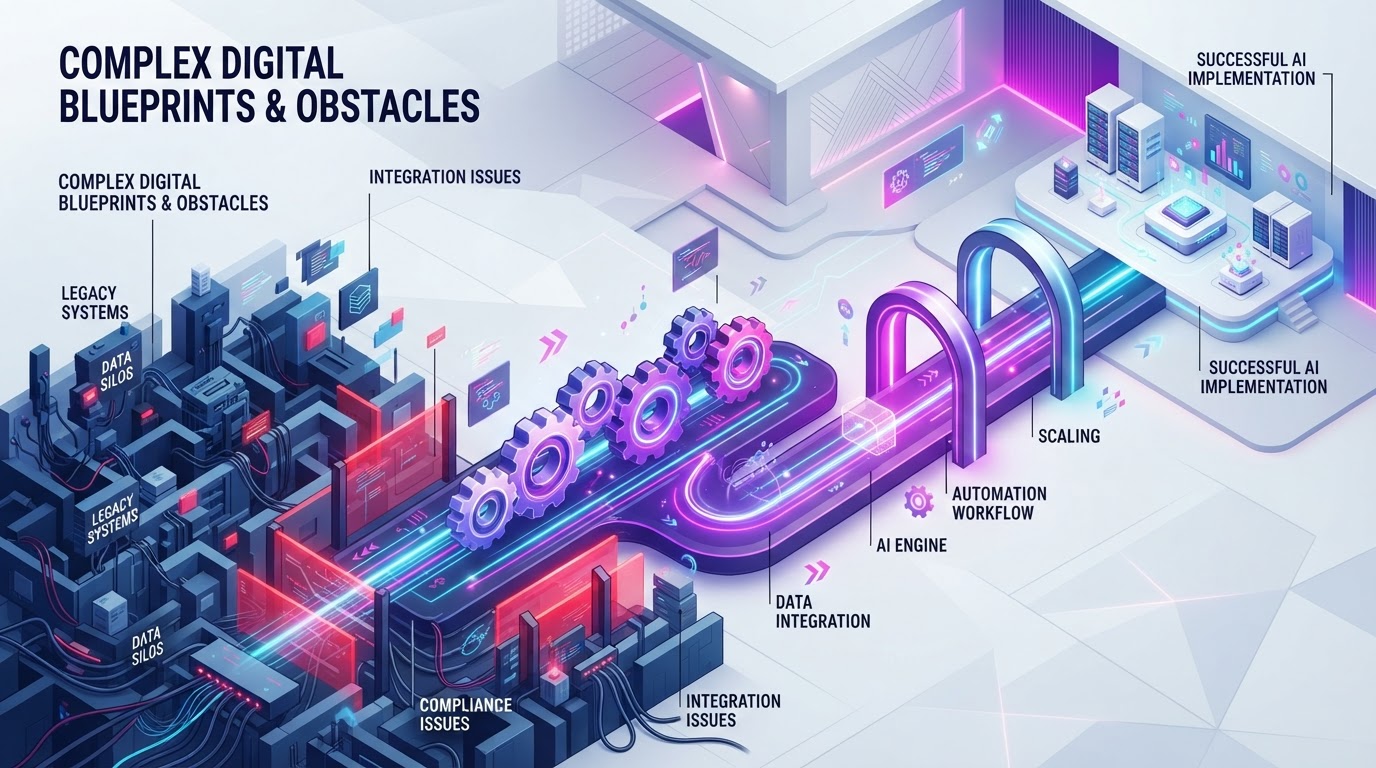
When we look at why, it is rarely the technology. It is almost always one of the same five AI implementation challenges. Here they are, with what we do to avoid them.
Mistake 1: Starting with AI instead of the problem
The most common mistake is wanting to “do something with AI” without a clear problem to solve. It usually starts with a tool someone has seen in a demo, and ends with a pilot nobody uses.
Start the other way round. Which process costs your team the most time, causes the most errors or loses you the most leads? Once that is clear, the question becomes how to fix it, and AI may or may not be part of the answer.
What we do: every project starts by mapping the process and agreeing what should improve, before any tool is chosen.
Mistake 2: Underestimating the data
AI works with the information you give it. If customer data is spread across spreadsheets, inboxes and three systems, full of duplicates and missing fields, the results will reflect that.
That does not mean you need perfect data before you start. It means you need to know where your data lives, which system holds the correct version, and what needs cleaning up for the process you want to automate.
What we do: we check the data for the first process before building, and fix what is needed for that process only, instead of starting a large data project.
Mistake 3: Forgetting the people
The hardest part of any AI project is not the technology. It is the change in how people work. When a team is not involved, they do not trust the output, work around the new system or keep doing things the old way in parallel.
The people who do the work today know the exceptions, the unwritten rules and the reasons things are done the way they are. They are the best source for designing the automation, and the most important people to convince.
What we do: we map processes together with the people who do the work, show them the results early and give them a clear way to step in.
Mistake 4: Choosing a complex solution for a simple problem
AI is impressive, and it is tempting to use it everywhere. But many processes do not need AI at all. Sending a reminder, moving data between two systems or checking a total against a rule is plain automation: cheaper, faster and fully predictable.
Complex solutions are also harder to maintain. Every extra system, model or connection is something that can break or needs updating when your business changes.
What we do: we use the simplest solution that solves the problem, and only add AI where information needs to be read, interpreted or written.
Mistake 5: Not measuring the result
Without a clear starting point, nobody can say whether an AI project worked. The result is a vague feeling that “it helps a bit”, which is not enough to justify the next investment or to know what to improve.
Decide before you build what you will measure: response time, hours saved, errors, conversion rate. Measure where you are today. Then check again after a few weeks and adjust.
What we do: every project has one or two agreed measures, a baseline before we start and a review after go-live.
Getting it right from the start
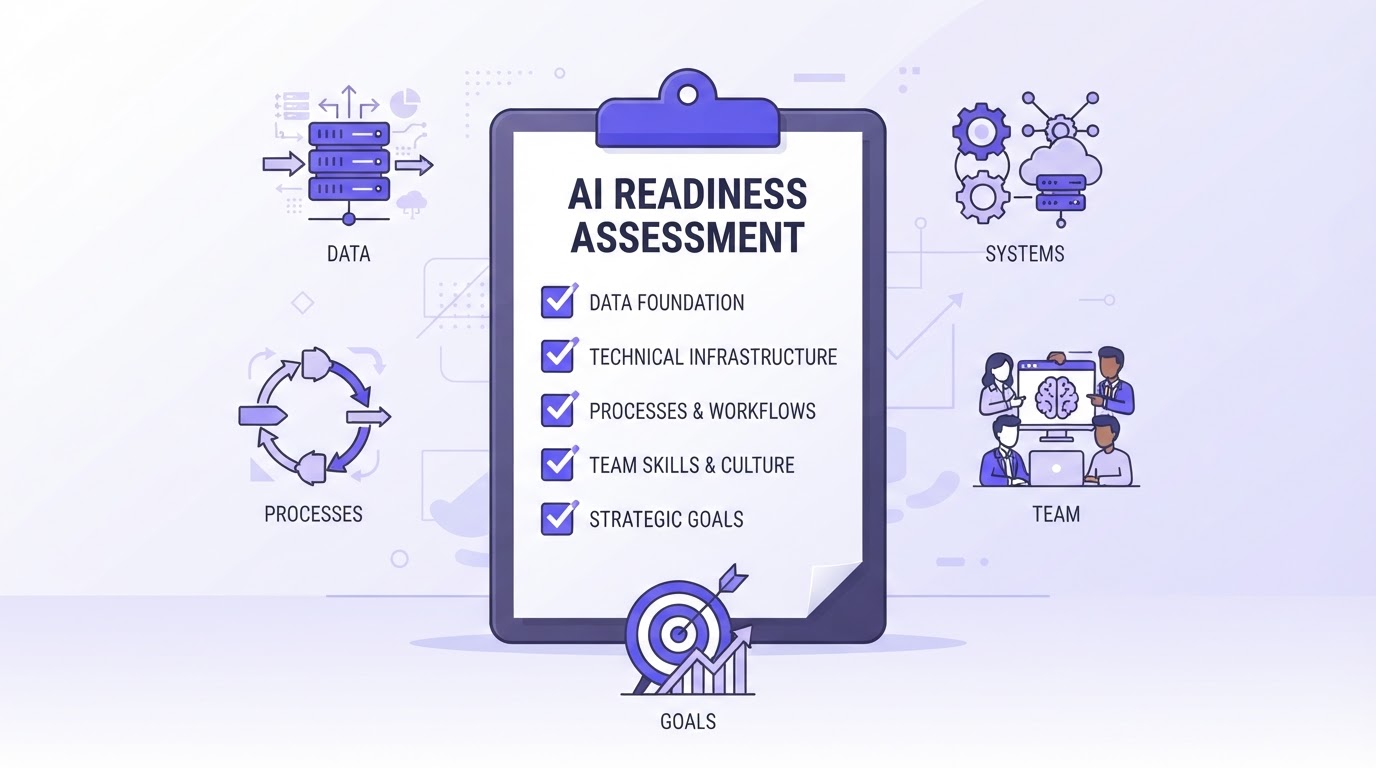
Avoiding these five mistakes is less about technology and more about approach: start with the problem, check the data, involve the people, keep it simple and measure the result. Do that, and AI and automation become a dependable part of how your business runs.
Our free audit is a good first step. It maps where time and leads get lost in your business and shows which processes to automate first, with or without AI.
Frequently asked questions