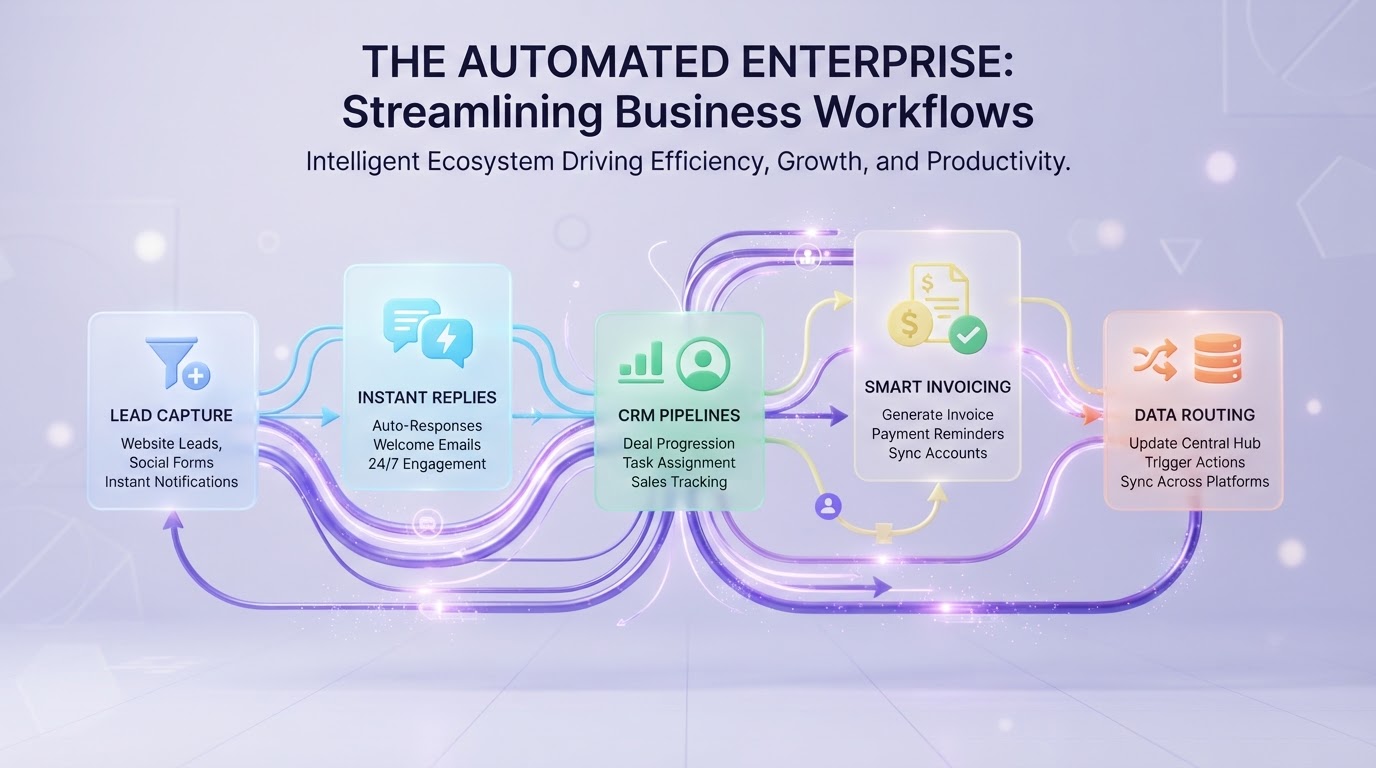
Customer service teams spend a large part of their day on the same questions: opening hours, the status of an order, how to reschedule, where to find an invoice. Meanwhile the conversations that need real attention wait in the same queue.
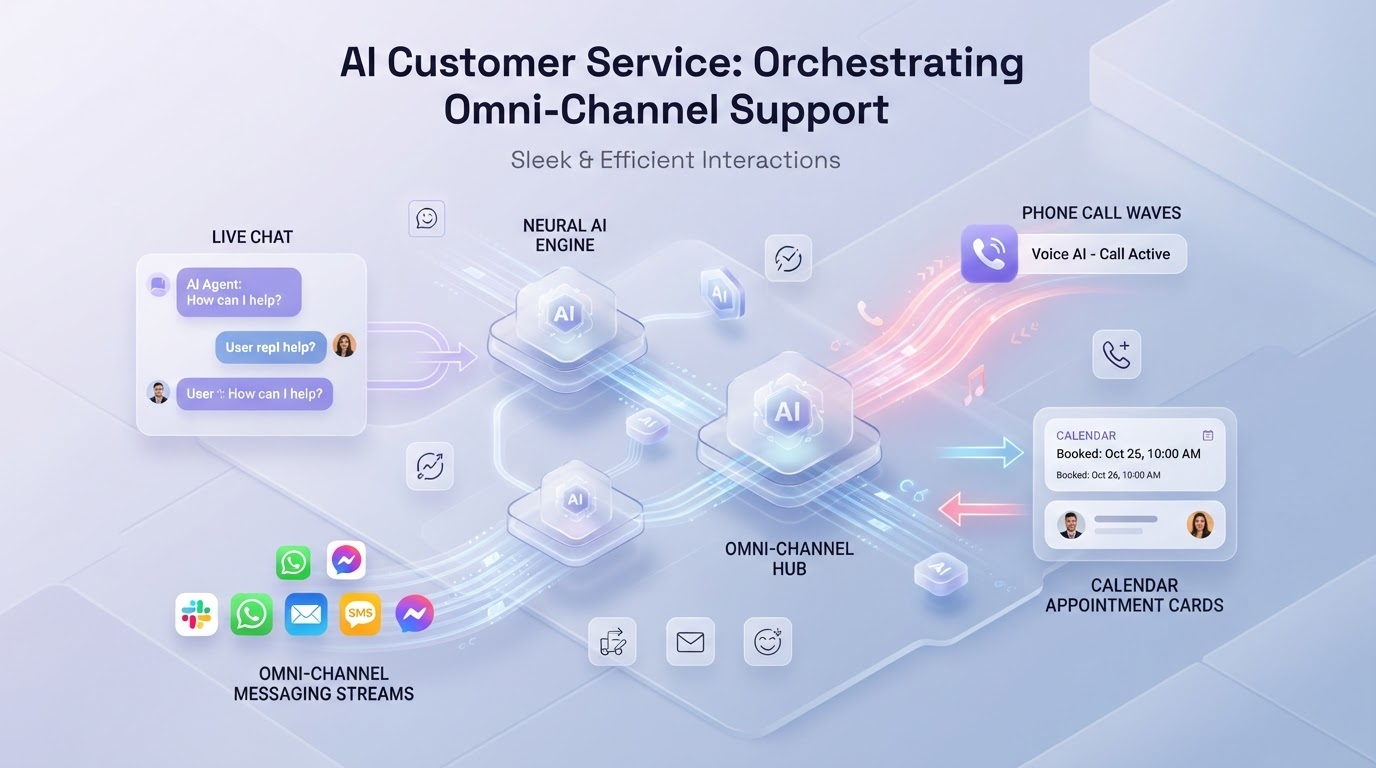
AI agents can take over a large share of that routine work, on the phone, in chat, by email and on WhatsApp. The question is not whether to use them, but what to automate first and where to keep a person involved.
What an AI agent is, and how it differs from a chatbot
Older chatbots followed scripts: a fixed set of buttons and answers, which broke as soon as a customer asked something unexpected. An AI agent understands questions in the customer’s own words, uses your business information to answer them, and can take actions such as looking up a booking, rescheduling an appointment or creating a ticket.
That makes AI agents far more useful, and also means they need clear boundaries: what they may answer, what they may do, and when they must hand over to a person.
What to automate first
1. Frequently asked questions
Start with the questions your team answers every day: opening hours, prices, delivery times, how a service works, what to bring. The answers are known, the risk is low and the time saved is immediate.
2. Triage and routing
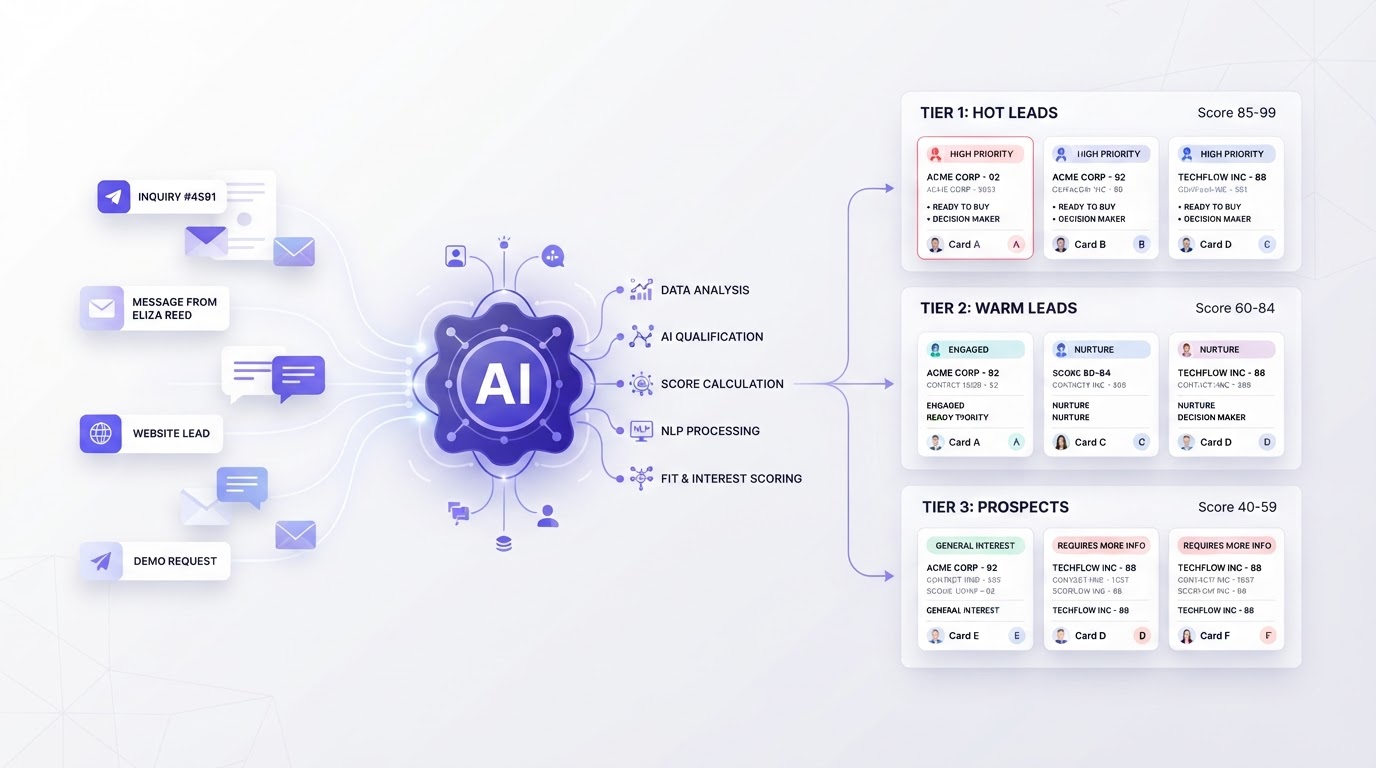
Let the agent work out what each customer needs and pass it to the right place: a booking request to the calendar, a billing question to finance, a complaint straight to a person. Even when the agent does not solve the question itself, the customer reaches the right person faster and does not have to repeat themselves.
3. Out-of-hours cover
Evenings, weekends and lunch breaks are when customers often reach only voicemail. An AI agent can answer, handle what it safely can and leave a clear summary for the team for the rest. Everything it handles is time gained, not time replaced.
4. Simple actions
Once the basics work, let the agent carry out simple actions: confirming or rescheduling appointments, sending a link to an invoice or booking portal, updating contact details. Each action should be reversible and logged.
5. A clean handover to your team
Every AI agent needs a clear route to a person. When a customer is upset, asks for a human or raises something the agent is not allowed to handle, the conversation is passed on with a short summary, so your team can pick it up without starting again.
Where to keep a person in the loop
AI agents should not make decisions that carry real risk or require empathy. Keep people in charge of:
- Complaints and emotional conversations: anything where tone and judgement matter more than speed.
- Anything involving money, refunds or contractual commitments: these need a person to authorise.
- Medical, legal or financial advice: an AI agent must never give it.
- Exceptions that fall outside your agreed rules: anything the agent is not explicitly allowed to handle.
Customers should always know they are talking to a digital assistant. In our experience, people accept that readily when the assistant is fast, helpful and hands over smoothly when needed.
How we approach it
Our AI Receptionist is built on these principles. It answers calls when your team cannot, handles common questions and bookings, and passes everything else to a person with a short summary. We first used it in a physiotherapy practice, where the boundaries are especially strict: it never gives medical advice, never judges how serious a complaint is, and tells every caller in its opening sentence that they are speaking to a digital assistant.
A rollout usually starts with out-of-hours calls only, so everything the agent handles is gained rather than replaced. Daytime cover and other channels follow once the team trusts it.
How to get started
- 1.List the twenty questions your team answers most often, with the correct answers.
- 2.Decide what the agent may answer, what it may do and when it must hand over.
- 3.Start with one channel and with out-of-hours cover.
- 4.Run a review period in which your team checks the conversations and corrects the answers.
- 5.Expand to more questions, actions and channels step by step.
Where to start
Want to know how much of your customer service could be handled by an AI agent? Our free audit maps how calls and messages are handled today and what to automate first.
Frequently asked questions